Wednesday, March 22, 2006

Tech's Tiger Teams

Just caught this on /. and couldn't pass it up...the original article is called Finding security's next 'American Idol'.

The basic idea is to have a competition to search for security technology that is simple to use and easy to understand. Congratulations to the three Tiger Team winners!

The article includes some sound bytes from Keith Edwards (one of my colleagues at Tech the first time I went through and is now a prof.) and Mustaque Ahamad one of my past and present professors and the head of the Information Security Center at Tech.

Some of the comments on slashdot are rather humorous... I like this one:
At 69 cents for the 'good' Ramen (Maruchian), $50K would buy 72463 grad student meals. That's enough to feed 66 grad students 3 meals a day for a year!!

And this one:
Georgia Tech College of Computing, Information Security Center and Graphics, Visualization and Usability Center
what's that, the GTCOCISCGVUC
... geeks, learn to be succinct!

Kipp

GT: Innovating Here and Now

Well, for all of you who missed this, the Georgia Tech Alumni Association put on a very interesting talk last night.

Three quite distinguished faculty presented some exciting work that is going on at Tech. The first, Dr. Roger Webb (ECE), discussed the Strategic Energy Initiative in which Tech is working to try to help out on the energy crisis. 2 key things, a feasability study with Georgia Southern using a wind farm off the coast of Savanah, and experimentation with using soft wood pulp to generate ethanol. These will certainly not solve the issue, but could help ease the problems on both the electricity and the vehicle fuel issues.

The second presentation was by Dr. David Parekh, Deputy Director of GTRI. GTRI now has over 1,200 folk with about a $140 million annual budget. He spent some time on two fascinating developments.

The first you may have caught in the news, the Ultra AP (Armored Patrol) vehicle which was featured in many publications including Fortune and Rolling Stone among others. A couple of innovative features of the vehicle:
  1. Built on COTS parts as much as possible starting with an F-350 chassis.
  2. Introduces the 'blast bucket' which is built to protect the people, not the vehicle. They consulted with NASCAR folk to learn what safety features they had developed and added some new things as well.
  3. 360-degree seating. The passengers sit around the center facing out -- giving visibility and protection on all sides of the vehicle. It also ends up being better for communications as the heads of the people are closer together.
  4. Lighter weight armor. Some compound they built which is much lighter than the steel armor currently employed saves weight and thus the vehicles can actually get decent fuel efficiency.
  5. From initial 'napkin' drawing to prototype vehicle in 1 year.
There are other features, but these stood out. Ultimately, all of these are meant to save lives, which seems to me like a very fine cause.

The second GTRI development is the creation of an International Applied Research Institute in Ireleand. This new development will focus on 4 key things:
  1. IPTV
  2. RFID
  3. Biotechnology
  4. Sustainable Energy
I hadn't realized, but per capita, Ireland is now the 2nd richest country in the EU. That's quite a dramatic change in a relatively short amount of time. Good stuff...

The last speaker was Dr. Don P. Giddens, Dean of the College of Engineering. He focused on the collaboration with Emory in the Winship Cancer Institute. Fascinating work on engineering chemicals and delivery agents to attack cancer cells while leaving the rest of the body in good health. Quantum dots, docking molecules, all sorts of whacky things going on. They have very good funding and are currently working on getting designated as a Comprehensive Cancer Center of which there are fewer than 50 in the states and none currently in Georgia.

----

It's clear that Tech is making lots of progress locally, nationally, and internationally as the interdisciplinary collaborations and activities seem to be reaching a fevered pitch. Exciting stuff to be associated with, and research that is working on some problems that will have huge impacts worldwide.

Monday, March 20, 2006

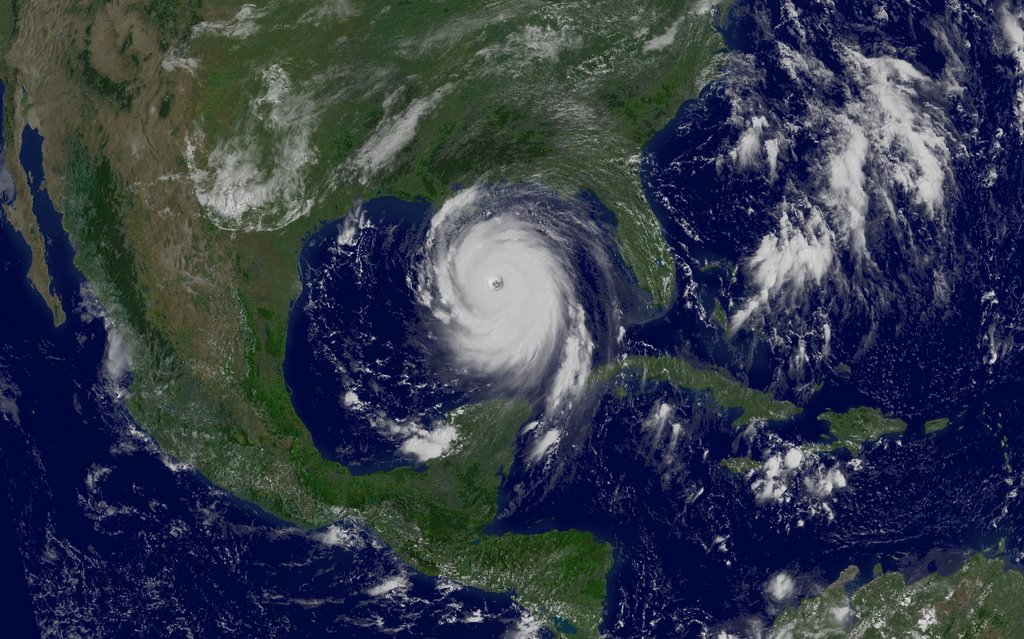
Hurricanes and Tech


As I mentioned in my Political Edge post, Judith Curry at Georgia Tech was doing some research on the hurricane frequency and it's now been reported in ScientificAmerican.com. According to the report about the increase in hurricanes and their strength, a "new statistical analysis shows that only this sea surface temperature increase explains this trend."

This article was really just a summary of the real article which is in the March 13th edition of Science online, check out the abstract. According to the abstract (I didn't buy the article, and it doesn't seem to be available via my GT library account), the researchers "use a methodology based on information theory, isolating the trend from the shorter term natural modes of variability. Results show that the increasing trend in number of category 4 and 5 hurricanes for the period 1970-2004 is directly linked to the trend in SST." Here, SST means Sea Surface Temperature.

Tech released some additional info on the research, but still no article. An earlier article is available though. I'll keep digging to get the full article...

Religious history and public school

While I'm expanding my blog...first politics and now religion...I thought I'd share some thoughts on a bill that is going through Geogria's legislature right now. Senate Bill 79 provides for the introduction of a couple of elective courses within the public schools. In particular, these are courses based on history as presented in the Bible. Apparently, this bill passed our Senate with a vote of 50-1, and is currently under consideration by our House.

The bill provides for 2 elective courses:
  1. History and Literature of the Old Testament Era
  2. History and Literature of the New Testament Era
I agree that an understanding of the stories in the Bible is useful and that references are all around us, so I don't object to kids learning about this. What I do object to is the fact that it is only the Bible, explicitly so. According to the text of the bill:
The courses provided for in this Code section shall:
(A) Be taught in an objective and nondevotional manner with no attempt made to indoctrinate students as to either the truth or falsity of the biblical materials or texts from other religious or cultural traditions;
(B) Not include teaching of religious doctrine or sectarian interpretation of the Bible or of texts from other religious or cultural traditions; and
(C) Not disparage or encourage a commitment to a set of religious beliefs.
(B) excludes any other religious texts from being introduced, taught or discussed. Holy cow, wouldn't it be better if we did a more comprehensive introduction to the various religious texts that different religions are based on, rather than having Bible Study? Let's teach our kids that the world (shrinking as it is) has many different beliefs and, by the way, here are some of the texts on which these beliefs are based on. Then, if you are so inclined, you can delve deeper into the particulars of your religious beliefs, but it's not only helpful to know the history of the Bible, but also the history, differences, and similarities with other religious beliefs.

My guess is that since we've successfully (so far) kept religion out of the science classes, we are trying to find other ways into the classroom, and this happens to be a convenient path. I don't like it one bit given that it is exclusionary, which I believe is the root of all evil.
My letter to my state representative, Jan Jones:

I understand there is a Senate Bill 79 which provides for the state funding of an elective in History and Literature of the Old Testament Era and an elective course in the History and Literature of the New Testament Era.

I would urge you to vote against this bill. While I agree that students should learn about the stories in the Bible as they are in general good stories and have basis in history, I strongly object to this being the only and exclusive religious based history that is taught in our public schools.

I would back a bill that would introduce and teach students about the various and diverse religious texts, writings, and learnings, but I believe it is a gross misuse of public funds to teach an exclusively Bible based religious history. I feel that an introduction to the broader world of religious history would be useful and feel that teachings on a single religious text should be the job of the church.


Thank you,


Kipp Jones

p.s. I used Congress.org to get my message through...


At the speed of Blog

Apparently the speed with which new (correct and misinformation) travels can leave some great gaps and provide ample opportunity for misquotes to be propagated and expanded like the waves of a tsunami. Such was the case with Andrew McLauglin's comment purportedly stating that the "FCC Sucks". As noted by Om, Andrew attempted to clear up the misquote informing us that his statement was taken completely out of context. Andrew's full response is online, but to paraphrase (rather than quote), he was stating one of the 5 arguments used by libertarian opponents of 'Net Neutrality', not his opinion.

So, if I get this straight, Andrew is saying that we can and should regulate for Net Neutrality and that the FCC is fully capable of handling this task? Hey, I'm all for net neutrality, as I really don't see good coming from having the industry tax content based on their desires to get their content out first/best, and there is some logic for a bidding war on the bandwidth, but don't both consumers and companies already pay the telcos for access to this bandwidth? And when has 'unlimited' mean only as much as they want you to use?

I can see some pricing plans that limit the bandwidth (haven't they tried these?), but I don't expect the public to sit idly by and have the telcos decide which services the customer should get high quality of service and which ones should get poor quality.

And what ever happened to 'bandwidth is free'???

Kipp

p.s. Andrew is the Senior Policy Counsel for Google, not the General Counsel as previously posted.

Friday, March 17, 2006

National Security Strategy


The US published a new National Security Strategy recently which sets the overall agenda and timbre of our foreign policy (http://www.whitehouse.gov/nsc/nss/2006/). As one article states, "the national security strategy is very crucial and it shapes the future characteristics of US relations with other players of the international community."

There are numerous summaries online that report interesting elements of the new document (first time it has been updated since 2002, prior to the Iraq invasion. You can get multiple perspectives by searching on "national security strategy" in google news (or your favorite). Most of the online news is about Iran as the document singles that country out as the single biggest current danger (page 20).

I thought I'd summarize the elements in the document that address Latin America, minimal though it is.

Section II, "Champion Aspirations for Human Dignity", Latin America gets a nod as "Democracy has made further advances in Africa, Latin America, and Asia, with peaceful transfers of power; growth in independent judiciaries and the rule of law; improved election practices; and expanding political and economic rights."

The next mention comes in Section IV, "Work with Others to Defuse Regional Conflicts." Page 15 has several bullet points:

• In Colombia, a democratic ally is fighting the persistent assaults of Marxist terrorists
and drug-traffickers.

• In Venezuela, a demagogue awash in oil money is undermining democracy and
seeking to destabilize the region.

• In Cuba, an anti-American dictator continues to oppress his people and seeks to
subvert freedom in the region.

I like the reference to Hugo as a demagaogue (wikipedia has a definition as "one who preaches doctrines he knows to be untrue to men he knows to be idiots."). A bit of an insult thrown at the president there.

Next, we see some discussion in Section V, "Ignite a New Era of Global Economic Growth through Free Markets and Free Trade", regarding bilateral trade agreements (page 25):

• Partnered with Congress to pass the Central America Free Trade Agreement – Dominican Republic (CAFTA-DR), long sought by the leaders of El Salvador, Honduras, Guatemala, Nicaragua, Costa Rica, and Dominican Republic;

and again in the same section on 'The Way Ahead' (page 28):

• In our own hemisphere, we will advance the vision of a free trade area of the Americas by building on North American Free Trade Agreement, CAFTA-DR, and the FTA with Chile. We will complete and bring into force FTAs with Colombia, Peru, Ecuador, and Panama.


In section VII, "Expand the Circle of Development by Opening Societies and Building the Infrastructure of Democracy", Chile gets a little nod on page 34:

"Our assistance efforts will also highlight and build on the lessons learned from successful examples of wise development and economic policy choices, such as the ROK, Taiwan, Ireland, Poland, Slovakia, Chile, and Botswana. "

Section VIII, "Develop Agendas for Cooperative Action with the Other Main Centers of Global Power" has a sub-section on our hemisphere (page 37):

These principles guide our relations within our own Hemisphere, the frontline of defense
of American national security. Our goal remains a hemisphere fully democratic, bound
together by good will, security cooperation, and the opportunity for all our citizens to
prosper. Tyrants and those who would follow them belong to a different era and must not
be allowed to reverse the progress of the last two decades. Countries in the Hemisphere
must be helped to the path of sustained political and economic development. The
deceptive appeal of anti-free market populism must not be allowed to erode political
freedoms and trap the Hemisphere’s poorest in cycles of poverty. If America’s nearest
neighbors are not secure and stable, then Americans will be less secure.

Our strategy for the Hemisphere begins with deepening key relationships with Canada
and Mexico, a foundation of shared values and cooperative policies that can be extended
throughout the region. We must continue to work with our neighbors in the Hemisphere
to reduce illegal immigration and promote expanded economic opportunity for
marginalized populations. We must also solidify strategic relationships with regional
leaders in Central and South America and the Caribbean who are deepening their
commitment to democratic values. And we must continue to work with regional partners
to make multilateral institutions like the OAS and the Inter-American Development Bank
more effective and better able to foster concerted action to address threats that may arise
to the region’s stability, security, prosperity, or democratic progress. Together, these
partnerships can advance our four strategic priorities for the region: bolstering security,
strengthening democratic institutions, promoting prosperity, and investing in people.

Note the mention that the "deceptive appeal of anti-free market populism must not be allowed to erode political freedoms" again might be pointing at our friends Hugo and Castro in particular, but I'm sure brings up the specter of others in the region that may be heading in that direction.

The final Latin America point comes in section X, "Engage the Opportunities and Confront the Challenges of Globalization" where we talk about narcs:

"To combat the cultivation and trafficking of narcotics, the Administration devotes over
$1 billion annually to comprehensive counternarcotics efforts, working with
governments, particularly in Latin America and Asia, to eradicate crops, destroy
production facilities, interdict shipments, and support developing alternative livelihoods."

My take is the order of priorities is something like:

1) Middle East (with Iran now taking the top spot in the top category)
2) Asia - Pacific
3) Europe, Mexico, Canada
4) Central & South America
5) Africa

Kipp

Thursday, March 16, 2006

Personal wealth, Negroponte and the Sikorsky CH-53


So Negroponte has been working on his $100 laptop for every child which seems a noble if difficult row to hoe. He recently left MIT Media Lab to pursue this effort (to be replaced, notably, by Frank Moss) and is now chairman of the One Laptop Per Child organization


This just won't due for Mr. Gates, who was recently noted as 'mocking' Nicholas for his efforts (see Bill Gates mocks MIT's $100 laptop project). Apparently, Bill wants them to have $600-$900 devices based on the MS Origami.

This would be all well and good if he would use his money...but wait, even the richest person on the planet can't make that happen for all of the children!

And yet my friend, Charles Shapiro, noted that Bill has done good, giving enough money to malarial prevention to really make a difference, while our penny-pinching founder of Wal-Mart gave like $10,000 to charity during his stay (now, I haven't actually checked the figures, so maybe somebody else can do some fact checking for me).

Okay, so I mentioned Bill is the richest man on the planet, but what about intergalactically? And if there was competition, how would we measure and compare intergalactic wealth? Charles, always the thinking man, suggested using the Kardashev scale, essentially boiling the problem down to 'how big a rock can he lift?". Now, for clarity, I think we need to specify that we are not talking actual size, but equivalent mass with equivalent gravities, elsewise it might be a bit unfair.

So, a poor person could lift with their own strength plus perhaps a donkey. I could probably spring for a back-hoe for a day. But Bill, well, he could go out and get him a Sikorsky CH-53 to move his rock around.


I guess in the end, it comes down to technology!

Silicon Valley Quotes

I get a daily summary from SiliconValley.com (which, with the recent purchase of Knight Ridder by McClatchy is sorta in the air). The summary includes a rather humorous quote each day, this one caught my funny bone:

Q U O T E D

"I no longer keep an inventory of my possessions inside my own head. ... I don't hunt for my shoes in the morning, I just Google them."

-- Futurist Bruce Sterling, who has freed up cranial capacity by using remote storage, unconcerned that someday the government may know where his shoes are.

Wifi or Cellular

This seems to be an emerging conflict that doesn't have an easy solution. I haven't really seen a full blown comparison of the options, but it would be interesting.

Network World gives a small treatment (very small) but you can start to see the conflicts, the issues and the players as each side is trying to get its stance and arguments straight.

Certainly where existing cellular technology can be upgraded, it would seem to have a good argument. But as municipal wireless networks become more prominent, does that start to change the economics? Is it one or the other?

Oh this should be interesting...

Kipp

FCC and Google

Funny, I recently had a conversation with Andrew McLaughlin regarding the reserach I've been doing in Africa on regional telecom regulation and Internet interconnection. A very insightful fellow that added quite a bit of value to my research.

Well, he is the general counsel for Google and he recently showed up on one of my news feeds when he 'groused' about the FCC.

Om Malik pointed it out, with the original story on Light Reading.

I gotta tend to agree, the FCC hasn't had the best record, but then we usually only hear about the things they screw up, there has to be some good stuff in there somewhere, right? I just can't imagine good coming out of this 'QOS' charge that appears to me as nothing more than a tax, a troll, a burden, a leech on a growing buisness that the big boys want to latch onto.

Kipp

Monday, March 13, 2006

Political edge

A recent article about a speech that Sandra Day O'Connor purportedly made caused me a bit of pause. A couple of recent items stand out for me that make coincidence more like a trend in my mind:

  1. This speech coming from a Republican -- and one who was responsible for upholding our Constitution
  2. Oddly inconsistent behavior wrt Dubai ports deal
  3. Wire tapping debacle
  4. Education and Research
    1. A recent seminar in which Dr. Judith Curry, Chair of the School of Earth and Atmospheric Sciences at Georgia Tech, discussed the current administration's crack-down on science from her perspective. In particular, the US is seen as
      completely out of touch when it comes to the issue of global warming. In some cases, we won't allow our scientists (within gov't control) to travel to international conferences on the subject. Here's a kicker. When W set up an advisory team on the issue, 1 of 3 out of the group was a novelist. Now, Michael Crichton is quite intelligent, a good novelist with in-depth research, and is certainly entitled to his knowledgeable opinions. But, given the depth of experience and knowledgeable actual scientists who have dedicated their lives to this issue, I find it hard to believe that he actually represented 33% of our highest qualified people on the topic...
    2. Recent trends in education to reduce, subsume, confuse people about evolution are alarming at a minimum. Here in Georgia, we have major issues, with a county not more than 2 miles away (Cobb) trying to change science into religion. It seems that the courts are upholding their end by striking these down, but it's scary how often they have to do it.
    3. Stem cell research...need I say more?
    4. Funding -- I don't know enough of the details on education and research funding, but I do know that both are areas I'd like to see more focus on. Our research institutions must spend a large chunk of their productive time hunting down funding (at less than 10% funding rate from key funding sources such as NSF). We must lose a large amount of productivity due to this institutional behavior.
  5. Continued reduction in information available via Freedom of Information Act
  6. Indefinite detention in Guantanoamo Bay (seems to go against our constitution)
  7. Iraq war (a person could point to a number of things here from pre-war build up, planning, execution, post-war, etc.)
I'm sure I'm missing things, and sorry that I don't have references yet, but wanted to get this into the ether. The one thing that is heartening, is that W's ratings have dropped precipitiously, perhaps as the evidence mounts, those of us who don't generally go for conspiracy theories start to really wonder...

Kipp

Sunday, March 12, 2006

Municipal Wireless

The growth of municipal wireless in the US is a rather interesting development on many levels. You've got the policy side, the competition side, the technical side, the business model side, the services side, and the consumer side. How all these interact and play out in the US should make for some nice fireworks.

And it's not just the big cities that are getting into the fray. An organization in Vermont and New Hampshire is working to use wireless technologies to get to places that the traditional phone and cable companies won't reach with broadband. As they declare it, Cloud Alliance is the "Dirt Road Wireless" company.

Some folk believe this is just the beginning of the muni wireless boom -- well yeah, it's barely been actually deployed with some 320 cities that have or are planning on deploying broadband wireless networks in 2006. According to Demographia, there are about 1300 cities in the US with population over 25,000 people. And the Yankee Group projects spending on these networks to reach $400 million in 2007 (up from some $171 million this year) according to an article in Network World.

Beyond the US borders, though, wireless networks have some great potential to impact the reach of the Interenet in developing countries. How this can be realized is a much greater challenge than deployment in the US where the consumer base has such a large base with both the technical means (computing devices) and the financial wherewithal to take advantage of the network connectivity and services offered via the network.

I believe this is fertile ground for me to continue my research in wireless networking, policy, international development, and location based services. I'm meeting with Abe Kani, the CIO of Atlanta next week to discuss these topics and more. I'll let you know how that meeting goes and as I (hopefully) gain focus around these ideas.

Spring

It appears that Spring has sprung in Atlanta. It should get up to 77 degrees today, the trees are blooming, and Spring Soccer has kicked off for both girls. We may even make it to the lake today to help put the neighbor's boat back in the water for the first time this year!

Spring breaks are right around the corner which I hope will give me some time to catch up and maybe finish last semester's work!

Problem is, spring weather makes it really hard to focus on work/school!

Friday, February 24, 2006

Testing this new Blogger Mac widget from google.  Wonder what the title will be?  

 Oooh, and I can do bold and italics, aint that keen?

Google also came out with a couple other widgets, one for gmail, and the other for search history...

www.google.com/macwidgets/

Thursday, February 23, 2006

Auxillary Google Services

I'm sure these are not new thoughts, but I'll throw them out anyway...

As I think about all of the information that Google (and others) get during their crawling, I'm thinking they could offer some business services with little additional expense on their side.

In particular, if you think about a company's web site, people spend money on several things:

- Content creation and translation
- Format and HTML conformance
- Web search optimization
- link/site structure
- syntax and spelling

So, how could Google help out? They could offer:

1) multi-lingual output
2) format and structure verification
3) search optimization/recommendations
4) link analysis - in this case, they could provide reports/analysis of in AND out links to a company's site
5) syntax and spelling checks across the scanned content
6) plagurism checks (notify me if my content shows up someplace else)

Essentially, this turns the process from a passive service to an active service, completing the feedback loop and creating an anti-entropy mechanism (btw, these are my favorites) in the process. The end result could be an improved web (content and structure). Google could offer the service at a relatively low rate, as the majority of the work is already being done. Companies would not have to individually invest in these processes, potentially saving money and improving their end users' experience on their sites...

Kipp

Wednesday, February 15, 2006

RSS discovery and spam

A friend of mine (Mitchell Friedman) was chatting with me this morning about auto-discovery of rss feeds, which is a cool idea.

A couple of items he relayed:
  • You can add a 'link' tag to your html that allows discovery of feeds for a given page. For example, my blog now has this embedded link: <link rel="alternate" type="application/rss+xml" title="RSS" href="http://kippsterblaster.blogspot.com/atom.xml">
  • For more on the link tag, check out this site
  • This dude Jermey Zawodny has a RSS Auto-Discovery 2.0 proposal on his blog
  • Those tricky spammers are at it in RSS, known RSS spam:
    • the best one was a list of recent patents as far as I could tell so the headline was real. and the summary was real - that is they seemed to be recent patents...but the link was spam
    • so now spammers can have mix and match legitimate content on the site with subversive content in one or the other or both.
    • and since the rss community is one big wheel of interlinking content/sites with hub sites like sindic8 -- interesting arena for the spammers to attack
    • and this is on top of the blog spam that has been and continues to be prevalent
The whole web/rss/blog spam and click fraud is an interesting topic. A colleague of mine at Tech (James Caverlee) is working on certain aspects of the web spam problem, especially looking at how page rank can be manipulated and vice-versa how to combat the problem.

I find the topic fascinating...if somewhat troubling at times...

Kipp

Monday, February 13, 2006

Holy cow this is cool!

In the words of my buddy John Brothers:

Wow. This is a future with potential.

This dude Vic Divecha found a really amazing demo that is a bit reminiscent of some movie scenes in the recent past.

I GOTTA get me one!

Friday, February 03, 2006

More Mud on the Tires


Mud on the Tires
Originally uploaded by kippster.
You've seen the flickr, now see the movie.

P.S. you'll likely have to download the entire thing since I'm too cheap to actually have a hosting service!

Thursday, February 02, 2006

Careers in IT?

A former colleague of mine recently posed this regarding a soon to graduate daughter:
some friends were pondering their future career paths. One young fellow has a strong interest in computers and asked me about the IT field. I would really be interested in how others would respond.


My response was:

As to your career question, I would be very emphatic about the positive possibilities in the field. I'd probably take a bit different approach, as I think we are entering a bit different era than the one you reminisce about (referring to the 'glory days' where you could just sit around and write code...).

In particular, computing has truly moved from being a purpose in and of itself - other than in a small subset of the research community. This is not all bad, it just means computing is now, even more so, a means to an end rather than an end in and of itself. This may seem blasphemous to some or maybe even trite, but I really think it has changed.

It does seem harder to find the 'sit in a closet and code' jobs. I would suggest that people with other skills in combination with computing are the hot commodity in the future. And that other skill can be in a whole variety of areas -- business, project, management, etc. But even that is missing what I think is the big push.

I would (and have) recommended that people entering the field take a look at not only computing but combining computing with another passion (unless that is your only passion and you are a guru, and not a self-described guru, but a true genius). For example, take somebody who loves dealing with the environment -- combine that with computing and do environmental modeling, or sensor networks to monitor environments. Somebody who loves photography can marry computing and photography via the digital media and communications networks to create and extend the capabilities. etc.

Computing is so embedded in what we do and is doing so much to enable other fields to go beyond their present state that not knowing computing (and that's not HTML), algorithms, programming, data structures, etc. is going to be a deficit in the future, at least for the advancing jobs and careers.

Would I tell somebody to go into computer science to become a programmer? No, but then that's never been me since I'm not that good at pure programming. But would I tell somebody to go into computer science? Absolutely and I hope my daughters heed at least some of my advice (of course things may change in the next 10 years that I don't anticipate).

Lastly, I think there are many opportunities with companies that do respect and build on experience of people, I don't think that's a lost art, just precious when you find it. I'd hate to paint the world with such a broad brush. The world is a very large place -- which brings me to my last point. I would very much impress on young people (and old people like me) the value of an international, global view. I would highly recommend anybody looking into the future and planning their career to consider the international aspects of their chosen career. Not only from the perspective that can be gained, but also from the flexibility that it can create for future opportunities, cause even though the world is large, ICT (Information and Communication Technology) is making it much smaller and so very interdependent.

Wednesday, February 01, 2006

TwoGirls - Mosaic


TwoGirls - Small Mosaic
Originally uploaded by kippster.
Here's a fun one for you (at least it was for me!). I discovered some software (MacOSaiX) that is really cool -- yeah it has probably been around for awhile, but I'm slow!

This mosaic is of my daughters, the original is below.

These 625 images are all from the last year or so (Greg's armpit is part of Laney's face, Abuja, soccer, Thanksgiving, Christmas, friends, family, lake, river, nebraska, nascar, football...etc. make up the rest).

I shrunk this one down, the original is 12.6MB and wouldn't upload to flickr...

The software also lets you pull images from other sources (e.g. Google Images) to make mosaics...very cool.